

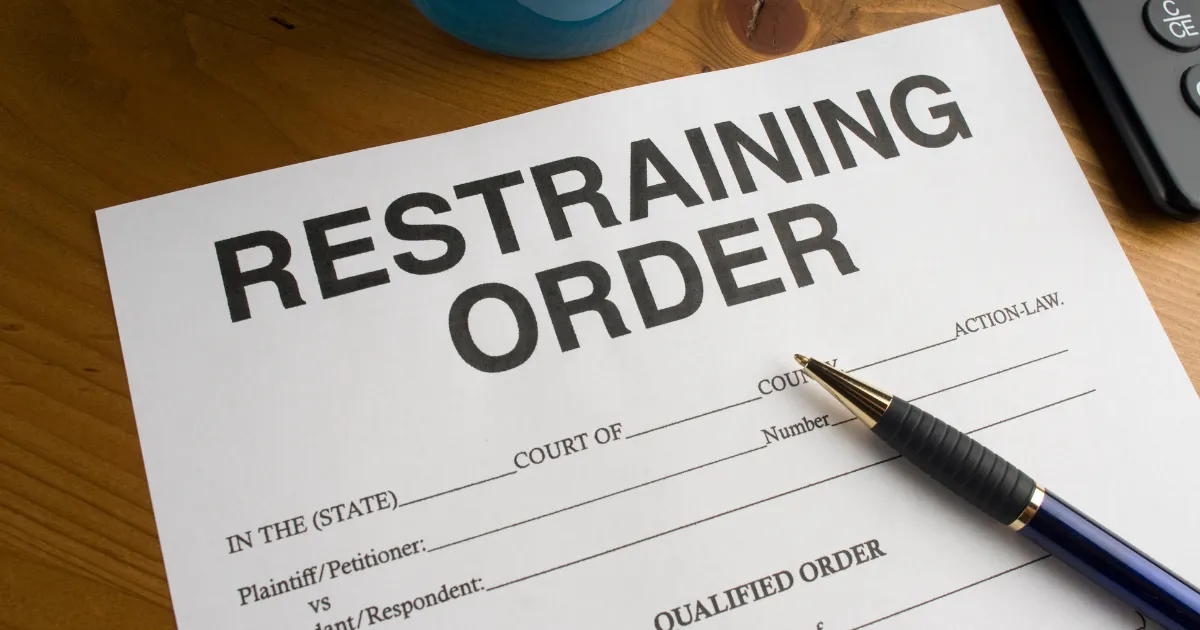
In New Jersey, a Temporary Restraining Order (TRO) or a Final Restraining Order (FRO) can place restrictions on the person accused of domestic violence, including prohibitions on where the person accused of domestic violence can go, restraints on how the accused and the accuser communicate (if at all), provisions on who remains in a shared residence, and orders of custody and parenting time.
A restraining order must be followed exactly as written. A violation of a TRO or of an FRO is considered a crime of “contempt.” A violation may include calling, texting, emailing, sending social media messages, appearing at the protected spouse’s home or workplace, using another person to send messages, refusing to leave the marital home when ordered, or violating parenting time restrictions.
Pursuant to N.J.S.A. 2C:25-30, all contempt offenses, except those constituting indictable offenses, are handled in the Family Part of the Chancery Division of the Superior Court of New Jersey. Contempt hearings handled in the Family Part are considered quasi-criminal proceedings. These cases are adjudicated by a Family Court judge but prosecuted by the State rather than the alleged victim of contempt. A contempt conviction has criminal implications, with the non-indictable offenses carrying potential jail time depending on the degree of the offense, any history of prior contempt convictions, and other factors.
Even if the plaintiff on the TRO or FRO initiates contact first, the person accused of domestic violence can still be charged with the crime of violating the restraining order for responding, engaging, or otherwise committing any act outside of that permitted by the restraining order. If contact is permitted and/or necessary due to children in common, for example, the Court must include language in the restraining order permitting the contact and establishing parameters to that contact, such as communications limited to the parties’ children and communication limited to a court-approved messaging application. If the restraining Order does not include this language, an amendment to the restraining order must be requested.
A restraining order violation, even one that is innocuous, can be charged as a crime of contempt. A contempt conviction can affect a person’s life significantly, even if a restraining order is later dismissed. It will appear on a person’s criminal history, affect his or her right to possess firearms, and impact a person’s travel, for example. A violation may also be used in a family law case to argue that one spouse cannot follow court orders or creates safety concerns. This could potentially impact a court’s handling of custody and parenting time.
What if the Person with the Restraining Order Contacted Me First?
Do not assume contact is allowed because the protected party reached out first. The restraining order controls what the restrained person may do. If the protected party initiates contact, that contact may be presented as a defense to a restraining order. However, if the order prohibits contact, responding will likely still be treated as a violation, and the restraining party should not respond.
How Can Morris County Domestic Violence Lawyers at Snyder Kenney & Mercado, LLC Help?
Snyder Kenney & Mercado, LLC attorneys are experienced in the handling of domestic violence and contempt matters. The attorneys can provide representation in the application for and defense against restraining orders, and represent you in defending against charges of contempt of a restraining order.
As experienced family law attorneys, we can help you understand the restraining order, the contempt charges against you, and how the domestic violence and contempt matters can affect your family law case, including issues of custody, parenting time, possession of the home, support, and property concerns.
Frequently Asked Questions About Restraining Order Violations
Can I Text My Spouse About Our Children?
Only if the order allows that type of contact, some orders permit limited communication about children through a specific app, attorney, or third party.
Can We Agree to Ignore the Restraining Order?
No. A private agreement between spouses does not override a court order. The order remains enforceable unless the court changes or dismisses it.
What Should I Do if I Am Accused of a Violation?
Do not contact the protected person to “clear things up.” Save relevant messages, call logs, emails, witness information, and documents. Consult with an attorney to best strategize your case.
Protect Your Rights With Our Morris County Domestic Violence Lawyers at Snyder Kenney & Mercado, LLC
Whether you need help enforcing an order, responding to an accusation, or addressing other family law matters, we can help you understand your options. Contact our Morris County domestic violence lawyers at Snyder Kenney & Mercado, LLC today. Call 908-574-3081 or fill out our online form for an initial consultation. Located in Parsippany, NJ, we proudly serve clients in the surrounding areas.